How Long Should You Keep Business Records? A Wisconsin and Illinois Guide
September 8, 2026

A good records retention policy isn’t about keeping everything. It’s about keeping records for as long as they’re needed and securely destroying them when they’re not.
Regularly clearing out unnecessary materials reduces clutter and makes records easier to manage.
What Are You Keeping That You Don’t Need?
Are you storing information because you need it, or simply because nobody has decided to get rid of it?
Businesses often accumulate materials they may no longer need, including:
- Duplicate copies when the official record is securely stored elsewhere
- Outdated drafts after the final version is complete
- Extra paper copies of records securely stored electronically
- Superseded forms, manuals, and reference materials that are no longer in use
Regularly clearing out unnecessary materials reduces clutter and the amount of sensitive information your organization has to protect.
Business Records Retention in Wisconsin and Illinois
There isn’t one retention period that applies to every business record. Even the familiar seven-year rule is generally a conservative business practice rather than a universal requirement. Retention periods depend on the type of record and the requirements that apply to your organization.
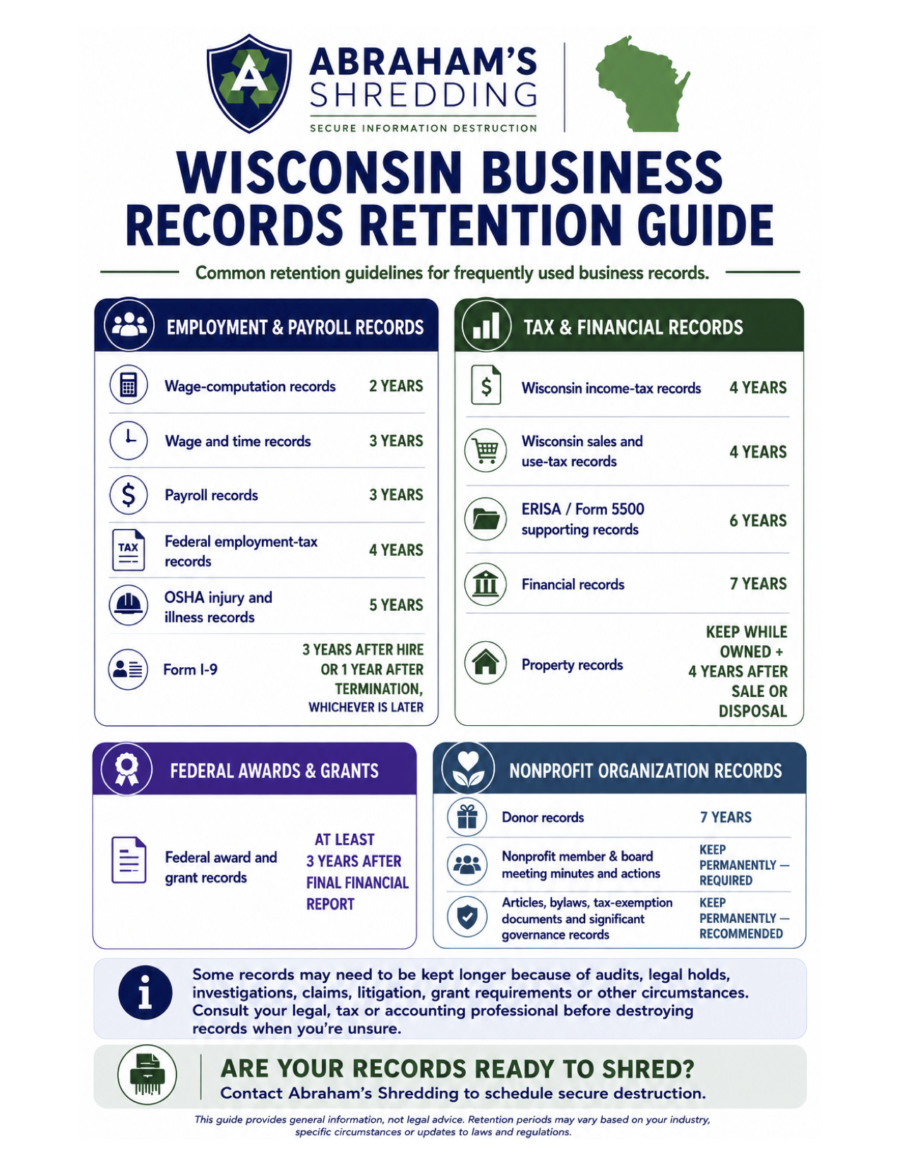
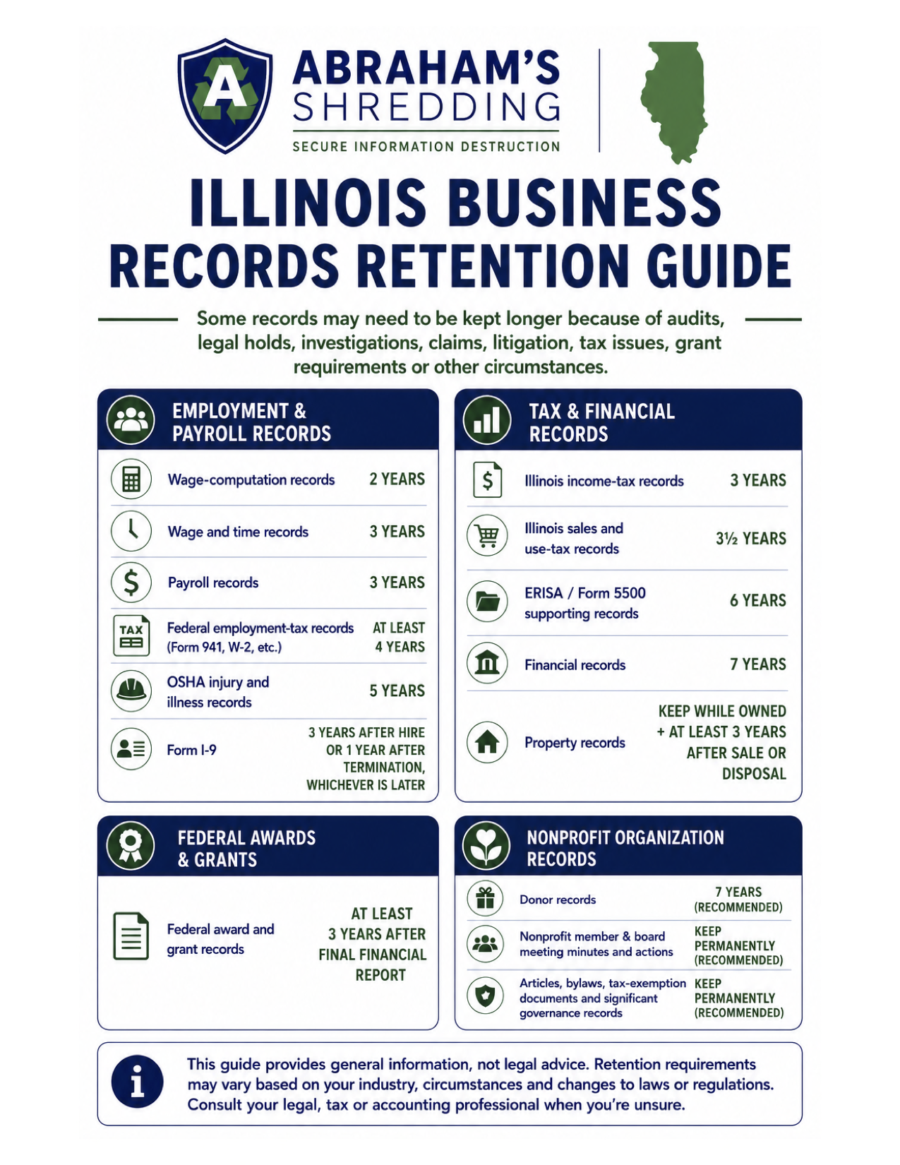
Wisconsin and Illinois have different requirements for some records. Use the appropriate guide below as a quick reference for common business records.
Wisconsin Business Records Retention Guide
Illinois Business Records Retention Guide
Some Records Don’t Have a Simple Expiration Date
Reaching the date on a retention schedule doesn’t automatically mean a record is ready to be destroyed.
Some records need to be kept longer because of what is happening with the business or the record itself:
- Contracts and leases: Keep them through the agreement. After it ends, retention may depend on how long a claim related to the agreement could still be made.
- Property records: Keep records needed to establish tax basis for as long as you own the property. After a sale or disposal, follow the additional retention period shown in the appropriate state guide above.
- Legal holds: If a legal hold applies, keep the affected records until the hold is formally released. Then check whether the record’s normal retention requirement still applies.
- Tax audits and government inquiries: If a record is relevant to an active audit or inquiry, keep it until the matter is resolved. Then check whether another retention period remains.
- Claims and disputes: If a record relates to an insurance claim, contract dispute, wage claim or employment charge, keep it until the matter is resolved and any applicable additional period has passed.
- Pending or anticipated litigation: Preserve relevant records even if their normal retention date has passed.
- Grants: Follow the grant’s specific requirements. Audits, award terms and other conditions can extend the normal retention period.
When It’s Time to Shred
Abraham’s Shredding provides secure document destruction for businesses and organizations throughout Southeastern Wisconsin and Northeastern Illinois. We can securely destroy records that have reached the end of their retention period and provide a Certificate of Destruction to document the process.
Are your records ready to shred? Contact Abraham’s Shredding to schedule secure destruction.
This guide provides general educational information and is not legal, tax or accounting advice. Record retention requirements vary based on the type of record, organization, industry and circumstances. Consult the appropriate government agency or a qualified legal, tax or accounting professional when determining requirements for your organization.