How to Make Document Security Easier for Your Team
July 22, 2026
Most teams are not trying to mishandle confidential documents. They are trying to get through the day.
That is why document security works best when the secure choice is also the easy choice.
Make Security Easier, Not More Complicated
A lot of workplace security advice sounds good on paper but fails in real life because it adds more steps, reminders, and decisions.
For busy employees, every extra decision creates friction.
If people have to stop and wonder whether a document is confidential, where it should go, or who should approve it, the process is already asking too much in the wrong moment.
A better system gives employees a clear default and removes confusion before it turns into a mistake.
Put Secure Containers Where Paper Actually Piles Up
Collection containers only work if people can use them easily.
If the shred container is tucked away in a storage room or across the building, paper is more likely to pile up on desks, near printers, in boxes, or beside regular trash bins.
Place containers where sensitive paper actually shows up: near copy machines, reception desks, billing areas, HR offices, medical records areas, file rooms, mailrooms, and shared workspaces.
Use a Clear Disposal Rule
One of the simplest ways to reduce mistakes is to give employees one clear rule for paper that is ready to be discarded.
If the paper is no longer needed and retention requirements have been met, it goes into the secure shred container.
That is the heart of a shred-all policy. It does not mean destroying records before they are eligible for disposal. Retention schedules, legal requirements, and internal policies still matter.
But once a document is ready to leave the organization, employees should not have to decide whether it is “confidential enough” to shred.
Some documents are obviously sensitive. Others may still include names, addresses, account details, signatures, employee information, customer information, pricing, notes, drafts, or internal records.
A shred-all policy removes the guessing. Paper that is ready for disposal does not go into regular trash. It goes into the secure shred container.
Make It Clear What Does Not Belong
A secure shred container should make paper disposal easier, but it should not become a catch-all.
Employees should know what belongs and what does not.
Paper documents that are ready for secure disposal belong there. Items like batteries, electronics, food, trash, binders, and other non-paper materials do not belong in a paper shred container unless your provider has specifically approved them for that container.
The wrong items can create safety issues, damage equipment, slow processing, or require extra handling.
Assign One Clear Owner
A simple system still needs ownership.
Someone should be responsible for keeping the process visible, making sure containers are being used correctly, scheduling pickups, and giving employees a place to go with questions.
That does not mean one person handles every document. It means one person or team owns the process clearly enough that it does not drift.
When no one owns it, small problems get ignored. Containers fill up. Storage boxes linger. New employees are not told what goes where. Old files stay in cabinets because nobody wants to make the disposal decision.
Clear ownership gives the system a point of accountability.
Set a Recurring Schedule
Document destruction should not depend on someone finally noticing that files are piling up.
When disposal only happens during panic cleanouts, year-end pushes, office moves, or storage room emergencies, confidential information may sit longer than necessary.
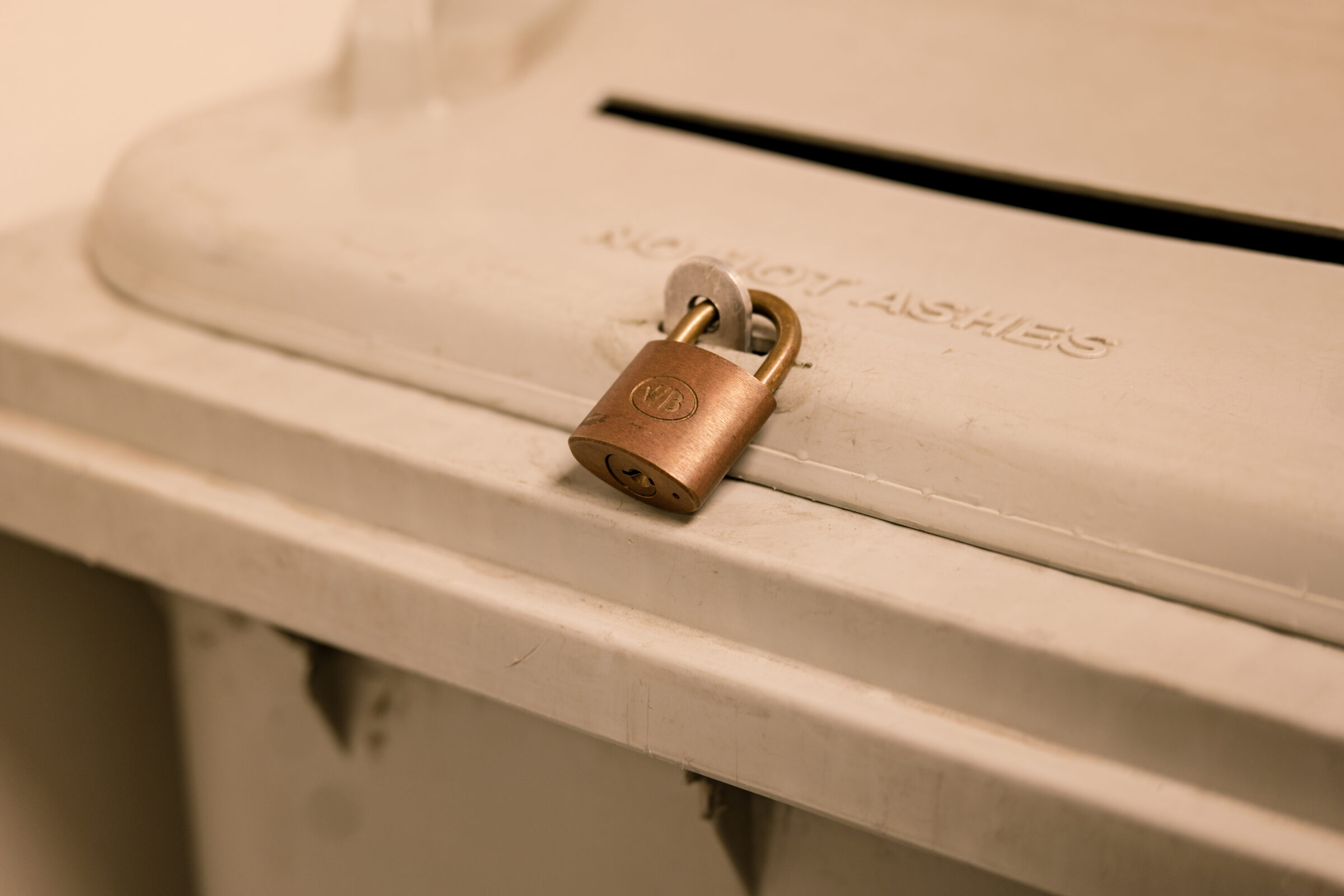
Scheduled shredding makes destruction part of the routine. Employees place documents into locked containers throughout the workday, and the material is destroyed on a regular schedule.
For larger cleanouts, one-time purge shredding can remove accumulated files from storage rooms, cabinets, or archive boxes.
Train for the Questions People Actually Ask
Training does not need to be long to be useful. It needs to answer the questions employees actually face.
What goes in the secure container? What stays out? What should never go in regular trash? Who should employees ask if they are not sure? What should they do when a container is full?
A short explanation during onboarding and an occasional reminder can prevent a lot of confusion. The goal is not to turn every employee into a records expert. The goal is to make sure they know the right next step.
Review the System When Work Changes
Even a good document security system needs a quick review when the workplace changes.
Teams grow. Offices move. Departments reorganize. Storage rooms fill up. Containers that once worked well may no longer be in the right place. A pickup schedule that used to be enough may no longer match the volume.
Look for where paper is piling up, where employees are unsure, where containers are inconvenient, and where old records are lingering because no one has made a decision.
The review does not need to be complicated. It just needs to be honest.
The Bottom Line
Document security gets stronger when the right action is easy to repeat.
Your team does not need a more complicated process. They need a system that makes secure disposal clear, convenient, and consistent.
Start with the basics: put secure containers where paper actually piles up, use a clear disposal rule, make sure employees know what belongs in the container, assign ownership, and set a recurring schedule.
That is how document security becomes part of the way work happens, not one more thing people have to remember.
At Abraham’s Shredding, we help organizations make secure disposal easier to manage with secure collection containers, scheduled shredding, one-time purge services, and documented destruction.
Make the secure choice the easy choice.