What Secure Data Destruction Actually Means
May 18, 2026
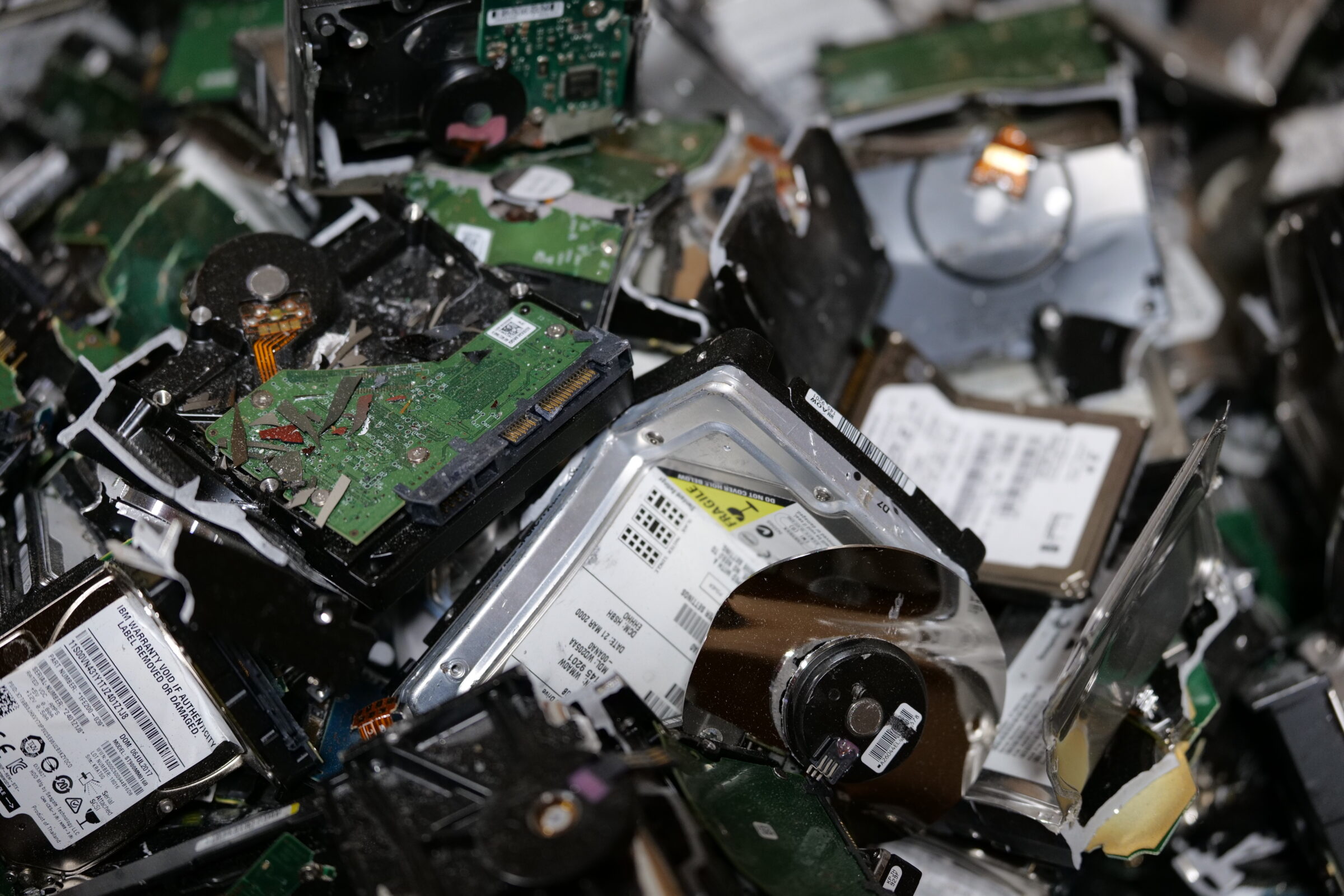
Most people assume that deleting files, smashing a hard drive, or even discarding old storage devices means their data is gone forever.
In reality, that is often not the case.
Secure data destruction is not about simply damaging a device. The goal is to make the information permanently unrecoverable by any conventional means. Different types of media store data differently, which means the destruction method must match the technology being processed.
Otherwise, sensitive information may remain intact.
Different Media Requires Different Destruction Methods
Not all storage devices are the same, and they should not be destroyed the same way.
Traditional hard disk drives (HDDs), solid-state drives (SSDs), backup tapes, thumb drives, and other media each require specific destruction techniques. Using the wrong method can create a false sense of security.
Hard Disk Drives (HDDs)
HDDs store data magnetically on spinning platters.
One of the most effective methods for securely destroying HDDs is degaussing. A degausser uses a powerful magnetic field to scramble the magnetic structure of the platters, making the data unreadable and the drive inoperable.
After degaussing, the drives are physically crushed or shredded. While the physical destruction provides visible proof, it is the degaussing that actually eliminates data.
At Abraham's Shredding, we document the serial number of every hard drive before destruction and include it on the Certificate of Destruction for complete verification and accountability.
Solid-State Drives (SSDs)
SSDs store data on memory chips rather than magnetic platters.
Because of this, degaussing does not work on SSDs. The only reliable method is physical shredding that destroys the memory chips themselves.
A destruction method that works for an HDD may still leave recoverable data on an SSD. This is why matching the right method to the right media is critical.
Backup Tapes and Legacy Media
Many organizations still have old backup tapes and archived media in storage. Even though they are no longer in active use, these tapes often contain highly sensitive information, including:
- employee records
- financial data
- customer information
- contracts and legal documents
Because backup tapes are magnetic media, they are typically degaussed and then physically destroyed.
Older media is easy to overlook, but the risk it carries is often just as serious as current data.
Thumb Drives and Portable Media
USB drives and other portable devices are small, inexpensive, and easy to lose track of. Yet they are capable of storing highly sensitive information in a very small device.
They frequently end up forgotten in desks, boxes, vehicles, or general recycling long after they are no longer actively used.
Secure destruction ensures the data is rendered unrecoverable before the media is recycled or discarded.
Why Visible Damage Can Be Misleading
Just because a device looks broken does not mean the data is gone.
A hard drive that will not power on or has a cracked case can still contain recoverable information. True secure destruction focuses on making data unrecoverable, not just making the device look damaged.
The visible part of destruction is not always the most important part.
Verification and Documentation Matter
Secure destruction is not complete without proper documentation.
A strong destruction process should include:
- serial number tracking
- chain of custody records
- detailed Certificates of Destruction
Without verifiable records, organizations are left relying on trust instead of evidence.
The Bottom Line
Deleting files is not data destruction.
Damaging a device is not data destruction.
Secure data destruction means the information can no longer be reconstructed or accessed, regardless of the storage method.
At Abraham's Shredding, destruction methods are matched to the specific media being processed, every asset is documented throughout the process, and Certificates of Destruction provide a verifiable record of what was destroyed.
Contact us to get started.